




30+ Years Leading Schools

Updated from a Modern Classic

Endorsed by Educators
Where Are the Shepherds?
We live in a culture of followers: thousands of "likes" and no one worth following. The skills that once made men and women of character worth trusting, clear thinking, careful listening, and winsome persuasion, have become rare. The authors trace the loss to a century-long shift in American schooling, and they show what it takes to reverse it in one family at a time.
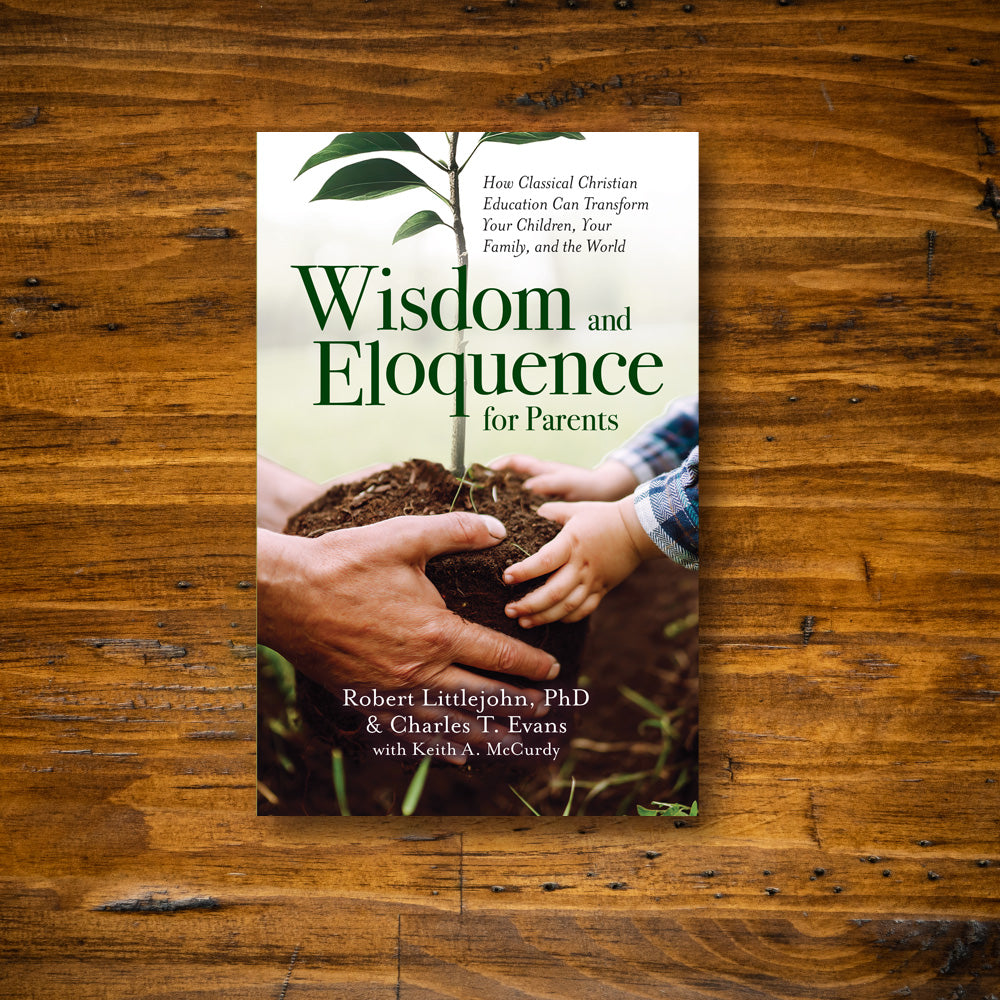
Wisdom and Eloquence for Parents gives Christian parents a coherent philosophy of education: what school is for, what it should produce, and how to tell whether your child is getting it. It is short, direct, and written for parents who have never read a book on education before.
Education vs. Training: What Our Kids Are Missing
Training prepares a person for one job. Education prepares a person for anything. Over the last century, American schools quietly traded the second for the first, and the results show up in test scores, in the workplace, and in the public square. The book explains the difference between education and training, and why it matters for your child:
- Why "college and career readiness" is a training goal, not an education
- What the classical liberal arts were designed to produce, and still can
- How reading, math, and writing instruction drifted from methods that work
- Why employers say graduates lack the skills that cut across every major
- What parents can do about it, whether their child is in a school or at home
Why a Christian Education Pays Off: What the Data Shows
Chapter 2 sets the case for a Christian school against the numbers: national test results, employer surveys, and the Good Soil study of 24- to 42-year-old alumni from six kinds of schools. The findings for graduates of classical Christian schools stood out on every measure.

88% Earned a Bachelor's Degree
Alumni of classical Christian schools finished college at higher rates than graduates of every other school type studied, including 45% of homeschool alumni.

86% Felt Prepared for College
Compared with about 60% of Christian school and homeschool alumni who said their high school prepared them well.

2.6× More Likely to Pray
Graduates were also 3 times more likely to give to their church and 6.7 times more likely to read, whatever the material. Faith that lasts into adulthood is the outcome parents care about most.

Only 33% of 4th Graders Read Proficiently
The 2022 Nation's Report Card found 29% proficient in math. After decades of reform, national reading scores have risen 4% since 1992. The book explains why, and what a better path looks like.

Raising Critical Thinkers, Not Consumers
Most of us would rather die than speak in public. Yet in nearly every walk of life, the ability to reason clearly and speak persuasively is the path to leadership and influence. The authors show how years of Socratic discussion, research, writing, and oral defense, ending in a senior thesis, turn anxious teenagers into young adults who can hold a room.
That is what the book means by wisdom and eloquence: children who know what is true and can say it well. Raising critical thinkers is not a personality trait. It is the product of a deliberate education, and the book shows parents what to look for and how to support it at home.

Robert Littlejohn and Charles T. Evans, with Keith McCurdy
Dr. Robert Littlejohn and Charles T. Evans have each spent more than thirty years founding and leading classical Christian schools. Their 2006 book Wisdom and Eloquence: A Christian Paradigm for Classical Education became a standard text for school leaders. This edition draws on that work and adds new material written specifically for parents.
Keith A. McCurdy, MA, EdS, a Licensed Professional Counselor and family educator, contributes the perspective of nearly forty years of work with families. He is also the author of Raising Sturdy Kids.
Learn More About the Book
What is a Christian philosophy of education?
What is a Christian philosophy of education?
A Christian philosophy of education answers three questions from a biblical starting point: What is a child for? What should an education produce? And how do we get there? Wisdom and Eloquence for Parents answers them plainly. The goal is a young adult who loves what is true, good, and beautiful, can reason about it, and can speak about it persuasively: in the authors' words, wisdom and eloquence. Everything else in schooling, from reading methods to Latin to the senior thesis, is judged by whether it serves that end.
What is the difference between education and training?
What is the difference between education and training?
Training prepares someone for one role or skill set. A trained carpenter cannot become an electrician without new training. Education, in its historic sense, prepares a person for anything, because it develops skills, knowledge, and virtues that transfer to any calling. The book argues that American schooling shifted from education to training over the twentieth century, and that the newest emphases, such as stand-alone STEM tracks, continue that shift. STEM subjects belong in a full education; offered alone, they are training.
Christian school vs. public school: what does the research say?
Christian school vs. public school: what does the research say?
The book summarizes the Good Soil study, an independent comparison of alumni aged 24 to 42 from public, secular private, Catholic, evangelical Christian, homeschool, and classical Christian schools. Classical Christian graduates led on college completion, sense of preparation, reading habits, church attendance, and personal prayer. The authors note the study's limits and add national data on reading and math proficiency, plus employer surveys, so parents can weigh the evidence for themselves.
How do you raise wise children in a distracted culture?
How do you raise wise children in a distracted culture?
The authors' answer is that wisdom is formed, not downloaded. Children become wise through years of reading serious books, discussing them with adults who take ideas seriously, practicing logic and rhetoric, and living in a community where faith and learning are one thing. The final chapters give parents practical ways to partner with a school, or to build these habits at home, so that children grow into contributors rather than consumers.
Is this book only for families in classical schools?
Is this book only for families in classical schools?
No. It is written for any Christian parent thinking about what school is for: families weighing a school choice, families already enrolled who want to understand the model, homeschooling families, and grandparents. Readers who want a primer on the model itself can also read What Is Classical Education?
How is this different from the original Wisdom and Eloquence?
How is this different from the original Wisdom and Eloquence?
The 2006 book was written for school leaders and teachers. This edition keeps updated selections from the original and adds new chapters for parents: a parent testimony, the value proposition, faith formation, the parent-school partnership, and a closing call to raise shepherds rather than sheep. It is shorter, more practical, and readable in a weekend. A free sample chapter is linked below.
Wisdom and Eloquence for Parents
A short, clear philosophy of education for Christian parents, from two headmasters who have spent their lives building schools worth trusting. Read the sample chapter, then bring the whole argument home.